How Orange Oil Treatment Helps In Eliminating Drywood Termites From Your Home
September 24, 2026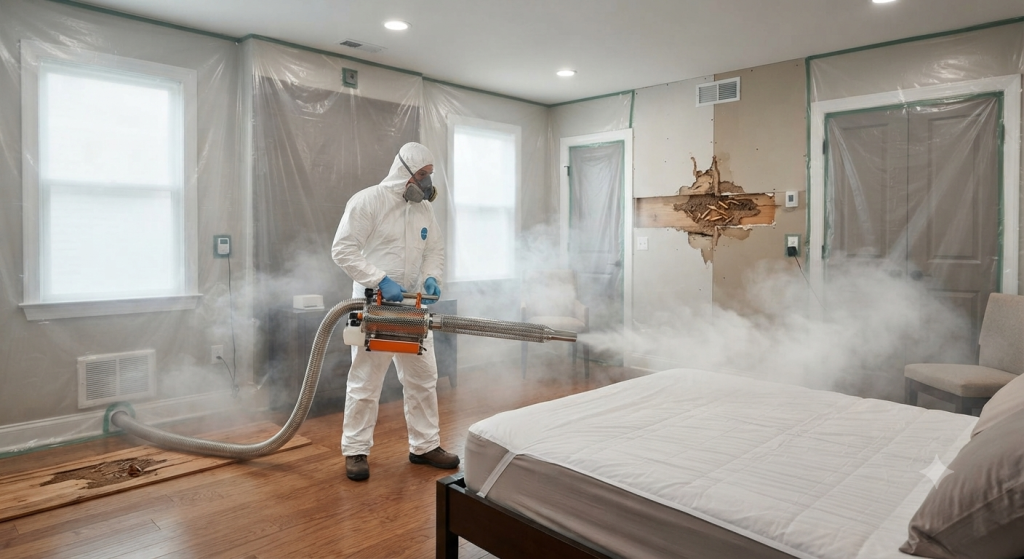
It sounds almost too convenient, but a single whole-home fumigation can clear bed bugs and drywood termites during the same visit. The reason comes down to coverage, because the gas fills the entire structure under the tent and reaches whatever is living inside that space, corner to corner. This article covers how that works, what the process looks like from start to finish, and when it actually makes sense for a household dealing with both pests at once.
Why One Tent Can Handle Both Pests
Structural fumigation applies odorless Vikane gas throughout the property, and every area covered by the tent gets treated, not just the rooms where activity was spotted. Bed bugs don’t build nests, so they hide in seams, furniture, carpet, and other spots near where people sleep, which makes a room-by-room spray a poor match for how they actually live. Because of that, a whole-structure bed bug fumigation reaches hiding places that a targeted approach can easily miss entirely.
Chem Free Exterminating uses this method for bed bugs and points out that any potential termites are cleared in the same pass, without a second appointment or a second tent. Drywood termites hide inside framing, and they do well in the dry wood found in Southern California homes, so the overlap between these two problems is more common than most homeowners assume.
The gas is manufactured by Dow, and Chem Free performs its own fumigations rather than relying on an outside crew for any part of the job. That matters because the same team that inspects the property is the one that carries out the treatment, so nothing gets lost between one company handing off to another.
How Bed Bugs Behave
Bed bugs are small, nocturnal insects that feed on human blood, and they usually live in mattresses where dinner is always close by. They crawl out just before dawn and bite for about five minutes, so most people don’t feel anything until the bug is already back in hiding, tucked into a seam or a crack.
They typically feed about once a week, yet they can live for roughly six months without a meal, and sometimes longer than a year if conditions are right. That patience is exactly why half-measures often fail, since a few survivors can wait out a weak treatment and start the whole cycle over again within a matter of months.
Common Hiding Spots
Bed bugs spread out well beyond the obvious mattress, which is part of what makes them so hard to fully clear without professional help.
- Mattress seams, box springs, and bed linens, where they stay within easy reach of a sleeping person night after night.
- Furniture within crawling distance of the bed, including nightstands, headboards, and upholstered chairs pulled close to where people sleep.
- Carpet, books, phones, and other everyday items, since bed bugs don’t need a nest and will settle into almost anything nearby.
- Cracks in baseboards, behind loose wallpaper, and along the edges of outlet covers, all of which give them a dark place to wait out the day.
Why Home Remedies Rarely Work
Natural home treatment measures prove ineffective in most cases, and the better move is hiring a professional rather than experimenting for weeks on your own. Store-bought sprays and do-it-yourself tricks tend to reach only the surfaces you can see, while bed bugs tuck themselves into places you’d never think to check, including inside picture frames and behind switch plates.
A partial treatment can also scatter bed bugs into new hiding spots throughout the home, which sometimes makes the problem harder to solve than it was before you started. That’s a big part of why a whole-home approach tends to outperform anything sold at a hardware store.
What the Process Looks Like
Before the Tent
Getting ready for a fumigation takes a bit of planning, but the steps themselves are straightforward once you know what’s coming.
- Schedule a free inspection so a licensed inspector can confirm the problem, walk the property, and explain the plan before anything is scheduled.
- Arrange a place to stay for two nights, including where any pets will go, since animals can’t remain inside during the fumigation.
- Ask for the prep instructions that apply to your specific home, because certain food items and plants may need to be removed or bagged beforehand.
- Confirm the date with every tenant or family member in the building so nobody plans to stop by or stay behind on treatment day.
After the Fumigation
Residents and tenants need to be out for two nights, which works out to three days from start to finish. Vikane gas leaves no residue once the fumigation is complete, so you don’t have to clean dishes or countertops when you come back home, and there’s no lingering smell to air out.
Signs You Might Have Both Problems
What to Watch For
If you’re already shopping around for termite extermination services, it’s worth mentioning any bites or sightings during that same inspection, since one visit can address both problems at once. Overlap is more common than people think, and a good inspector will check for both issues rather than assuming only one pest is present.
- Itchy bites you can’t explain, especially ones that appear in a line or cluster after a night’s sleep.
- Live bugs in mattress seams, box springs, or nearby furniture, sometimes visible as small reddish-brown insects or tiny dark spots on the fabric.
- Winged insects gathering near windows and doors, which is a classic sign that a termite colony nearby has started to swarm.
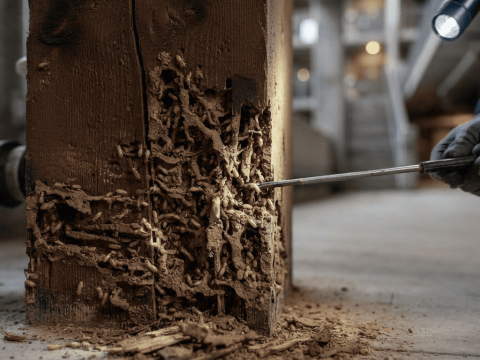
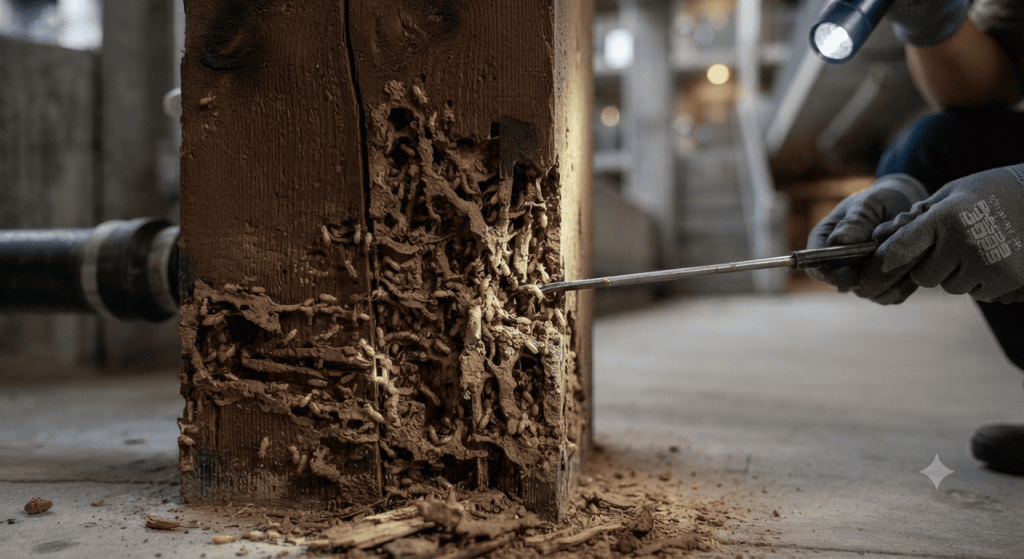
- Wood that sounds hollow when tapped, or shows tiny holes with soil around the edges, both of which point toward termite activity inside the framing.
Common Mistakes to Avoid
Habits That Make Things Worse
A few habits show up again and again in homes where the problem got worse before anyone called a professional.
- Waiting weeks for the problem to fade on its own while the bugs keep feeding and multiplying in the background.
- Spraying only the bedroom when the insects could already be in nearby furniture, carpet, or books throughout the house.
- Ignoring winged insects near windows because the bites feel like the more urgent emergency at the time.
- Moving furniture between rooms during an active infestation, which can spread bed bugs to areas that were previously clear.
Is Fumigation Overkill for Bed Bugs?
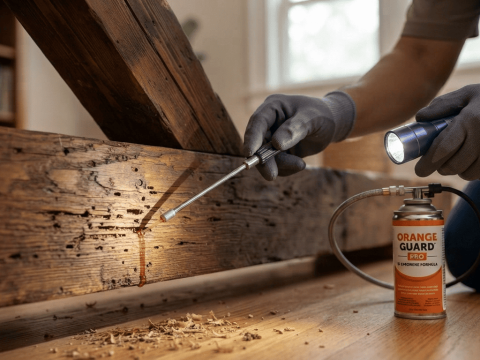
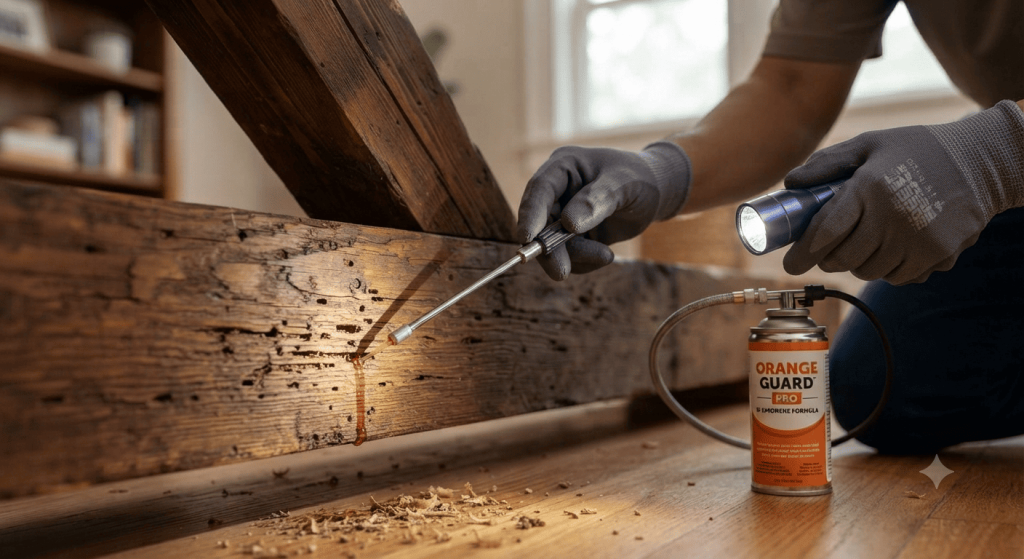
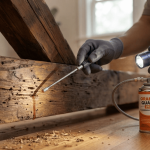
It’s a bigger step than a spray, and that deserves a plain answer rather than a sales pitch either way. Chem Free’s approach for bed bugs is whole-home tent fumigation, because it ensures the entire home has been treated rather than just the rooms where bites were noticed. If the inspection shows only a small pocket of drywood termites and no bed bugs, orange oil may be enough on its own, and nobody would need to leave the house at all.
The right call really does depend on what the inspector finds, not on which method sounds more dramatic. That’s why the inspection comes first, before any product or method gets discussed.
Get Answers From Chem Free Exterminating
Chem Free Exterminating is a family-owned company that has served Los Angeles and Orange County since 1989, and its licensed inspectors handle both pests under one roof. Call (714) 533-7800 to schedule a free, same-day inspection and find out whether one fumigation can solve your problem before it spreads any further.
Frequently Asked Questions
Can one fumigation really treat bed bugs and termites together?
Yes, a whole-home tent fumigation with Vikane treats the entire home, including any potential termites, in a single visit.
How long do I need to be out of the house?
Residents and tenants need to be out for two nights, which works out to three days total.
Do I have to wash dishes and countertops afterward?
No, because Vikane gas leaves no residue once the fumigation is complete, so cleanup afterward is minimal.
Why don’t home remedies work on bed bugs?
They usually miss the hiding spots, and bed bugs can survive around six months without feeding, sometimes longer than a year, so partial treatments rarely finish the job.
Where do bed bugs hide besides the mattress?
They can be in nearby furniture, carpet, books, and even phones, since they don’t build a nest and will settle almost anywhere close to where people sleep.