When Do Localized Termite Treatments Make More Sense Than Whole-Home Fumigation?
October 19, 2026
How Does Orange Oil Treatment Help Control Drywood Termites?
November 2, 2026
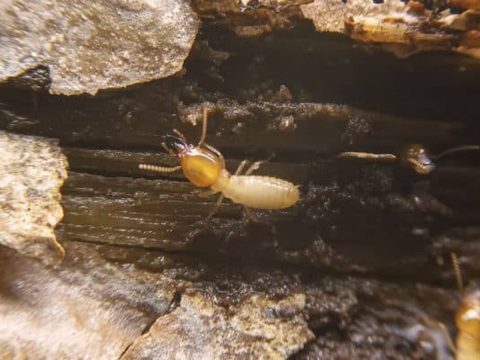
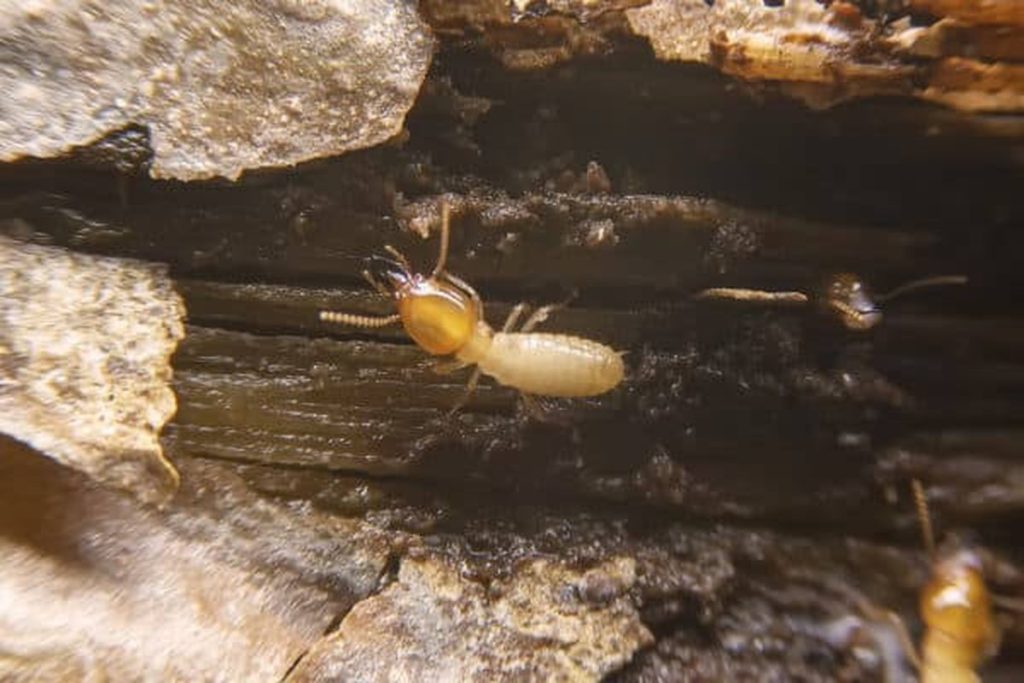
Drywood termites are good at staying out of sight, which is exactly why they cause so much damage before anyone notices. They live entirely inside the wood, so the first sign is often a few tiny pellets on a windowsill or a swarm of winged insects near a door. By the time you see either one, the colony has usually been at work for a while.
This is where drywood termite fumigation earns its reputation as the most thorough option available. Instead of hunting for each gallery one at a time, the treatment surrounds the whole structure with gas that travels to wherever the termites are. Here is how that works in practice.
Where Drywood Termites Hide
Drywood termites nest and feed in undecayed wood that has low moisture, which describes most of the framing in a Southern California home. Colonies can sit inside wall studs, attic framing, eaves, and trim for years without any outward signs.
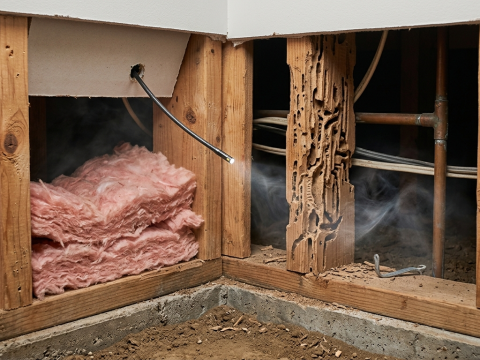
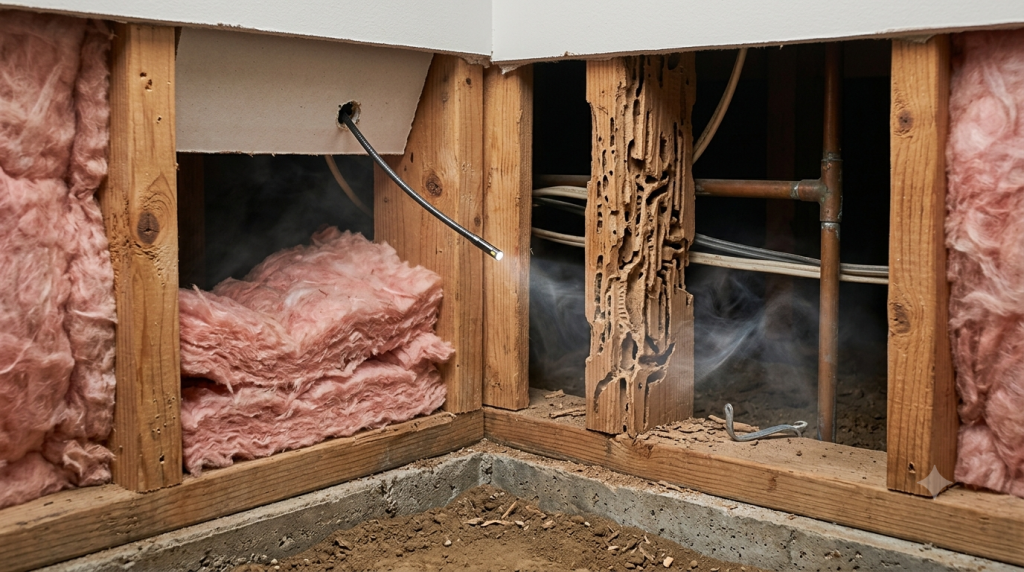
Termites are cryptic by nature, and the outer surface of the wood is often left intact while the inside is hollowed out. Even a seasoned inspector can overlook hidden damage, which is why treatments that rely on finding every colony carry some risk.
Common signs that point to drywood activity
Drywood termites rarely announce themselves, so the clues tend to be small and easy to dismiss. Checking a few key spots around your home can tell you whether it is time to call an inspector.
- Winged termites are usually found indoors, gathered near windows and doors because they are drawn to light. You may find the insects themselves or just a scatter of discarded wings on sills, which often means a colony has matured enough to send out swarmers.
- Wood that is hollowed out along the grain, sometimes with dried mud or soil lining the galleries. A light tap with a screwdriver handle on baseboards, door frames, and window trim can reveal a papery, hollow sound where the wood should feel solid.
- Tiny holes in plaster or drywall with bits of soil around the margins. These openings are easy to mistake for nail pops or minor wall damage, so look closely for debris around the edges.
- Rippled or sunken areas behind wall coverings, which can indicate tunneling underneath. Paint or wallpaper that bubbles, buckles, or looks uneven without any water source nearby is worth a second look.
- Small piles of tiny pellets beneath wood surfaces, often found on windowsills, in attic corners, or along the floor below infested framing. These are droppings pushed out of the colony, and they usually keep reappearing after you sweep them away.
None of these signs proves a drywood infestation on its own, and several can have other causes. When two or more show up in the same area, though, a free inspection is the sensible next step, since termites inside walls are easy for even an experienced eye to miss.
Why Southern California Homes Are So Exposed
The dry climate here is close to ideal for drywood termites, since they don’t need contact with soil or standing moisture to survive. A colony can start in a single piece of dry lumber and spread slowly through connected framing over the years.
That slow, hidden spread explains why many homeowners only find out after a swarm or during a home sale inspection. By then, the activity is often in more than one place.
How Fumigation Gets Inside the Walls
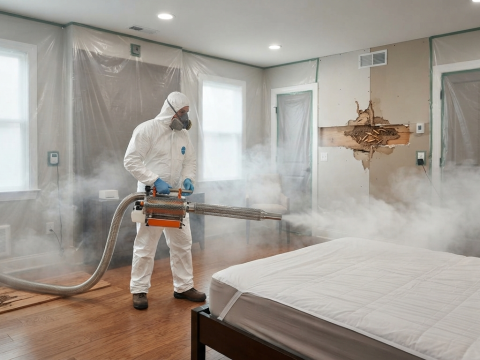
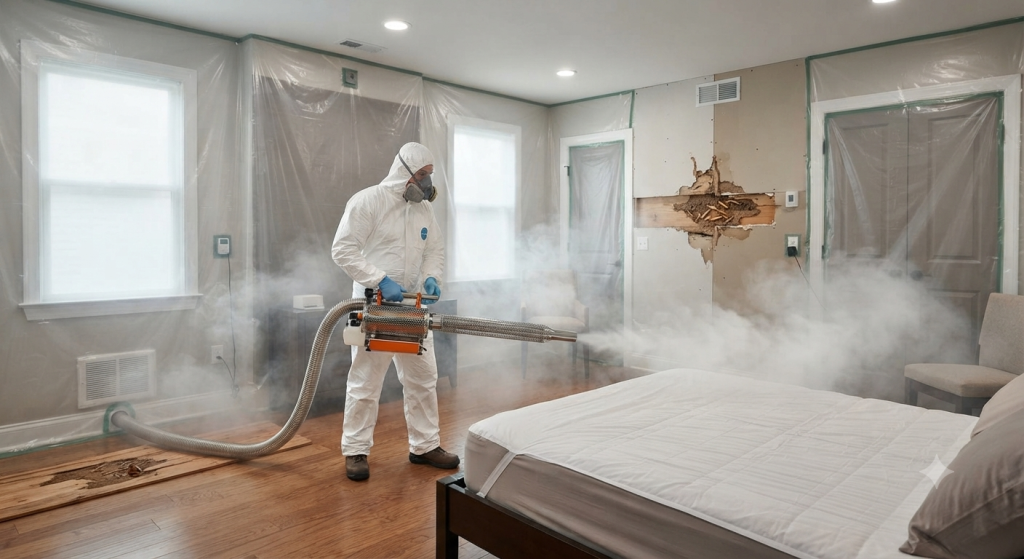
The structure is covered with tarps so the gas stays contained, and then Vikane is released inside. Because Vikane is a gas rather than a liquid or a spray, it spreads through the air in the building and moves into wall cavities, attic spaces, and the wood itself.
Every area under the tent gets treated, so the crew doesn’t need to find or open up each gallery. That is the practical advantage over methods that depend on locating the activity first.
What a fumigation crew generally does to keep coverage complete
- Seals the structure so the gas can’t escape and the needed level is maintained.
- Keeps the structure closed for the full exposure period required for the treatment.
- Ventilates the building and confirms it is clear before residents come back.
How Fumigation Compares to Orange Oil and Localized Work
Orange oil is a scope-and-inject method that carries the product into the wood where termites are feeding, and it works well for smaller problems that involve only drywood termites. Tim-Bor and other localized treatments follow a similar spot-based logic.
Those are good tools when the activity is confined, but they depend on knowing exactly where the termites are. When that location is uncertain, fumigation removes the uncertainty because it treats everything under the tent.
When fumigation is usually the stronger choice
- Activity shows up in multiple rooms or on more than one level of the house.
- There is evidence that the colony has spread through the walls and the attic.
- Nobody can confidently locate every area where the termites are feeding.
What Homeowners Should Expect
Residents and tenants need to be out for two nights, which is about three days in total. Vikane leaves no residue after fumigation, so you don’t have to clean dishes or countertops when you return.
Your fumigator will give you a preparation checklist ahead of time. Following it closely is the best way to keep the schedule on track and the treatment effective.
Questions Worth Asking Before You Hire a Fumigator
The company you choose matters as much as the method, because the quality of the sealing and the clearance steps depends on the crew. When you compare termite control services, ask who actually performs the fumigation and what licenses they hold.
Questions to ask
- Does the company perform its own fumigations, or does it subcontract them?
- Does it hold a Branch 1 license for structural fumigations, and are its inspectors Branch 3 licensed?
- Is it in good standing with the Structural Pest Control Board, and is it bonded and insured?
- What happens after treatment if wood damage needs repair?
After the Gas Clears
Eliminating the termites is only part of the job, because the damage they caused remains in the wood. We provide custom wood repairs for termite, dry rot, and fungus damage, which usually involves replacing structurally weakened wood and then treating new and existing wood with borate.
Annual service warranties are also available for homeowners who want ongoing protection after the work is finished.
Thorough Fumigation by Chem Free Exterminating
Chem Free Exterminating is a family-owned small business serving Los Angeles and Orange County since 1989, and we perform our own fumigations with Vikane gas. Our inspectors are licensed, our company is in good standing with the Structural Pest Control Board, and every inspection is free. We also offer orange oil and other localized treatments, so the recommendation fits what your property really needs.
Frequently Asked Questions
How does fumigation kill termites I can’t see?
Vikane is a gas that spreads through the sealed structure and into the wood, so it reaches termites in wall cavities, attics, and other hidden areas.
How long do I need to be out of the house?
Residents and tenants need to be out for two nights, which works out to about three days.
Do I need to wash my dishes afterward?
No, because Vikane leaves no residue, so dishes and countertops don’t need cleaning after you return.
Is orange oil an alternative to fumigation?
For smaller infestations involving only drywood termites, orange oil can work without tenting, and the inspector will tell you which option suits your home.
Does the same treatment work for bed bugs?
Yes, whole-home fumigation with Vikane is also used for bed bugs, and it treats any potential termites at the same time.